In the spotlight: The Tat/Avena Blog
- Details
- gwEm
When looking at the Avena listings on Pouet or Demozoo one could be forgiven for thinking the crew is more or less inactive...


The schedule for upcoming Sillyventure party in Gdansk has been published recently. Among the usual compo slots there will be talks on different Atari matters, one of them by Suavek presenting his remarkable Re-Falcon project or Odipar and Steen showcasing their upcoming Atari ST chipmusic project "RhYMe".
Having a look at the compo rules also brings some changes. Sillyventure is addressing the generative AI debate by not allowing generative AI content in the music or graphics compos, while it stays permitted in other categories (games, demos, wild) when properly stated in the submission metadata.
According to the rules, "it is not permitted to use entire, sampled fragments of other people's copyrighted works". One could state this is kind of contradictory, taking into account LLM are fed with exactly this. But well, it shows how complex the matter is, also for scene events and its organizers. Good to see approaches experimenting and trying to adopt to the situation.
Furthermore, and presumably mirroring the challenging reality, the rules also explicitly exclude "Any entries of a political nature, containing any criticism or agitation, concerning current events, conflicts or images of living politicians."
🔗 Sillyventure website with timetable
🔗 Sillyventure compo rules
Ready for another trip down the history lane? ;)
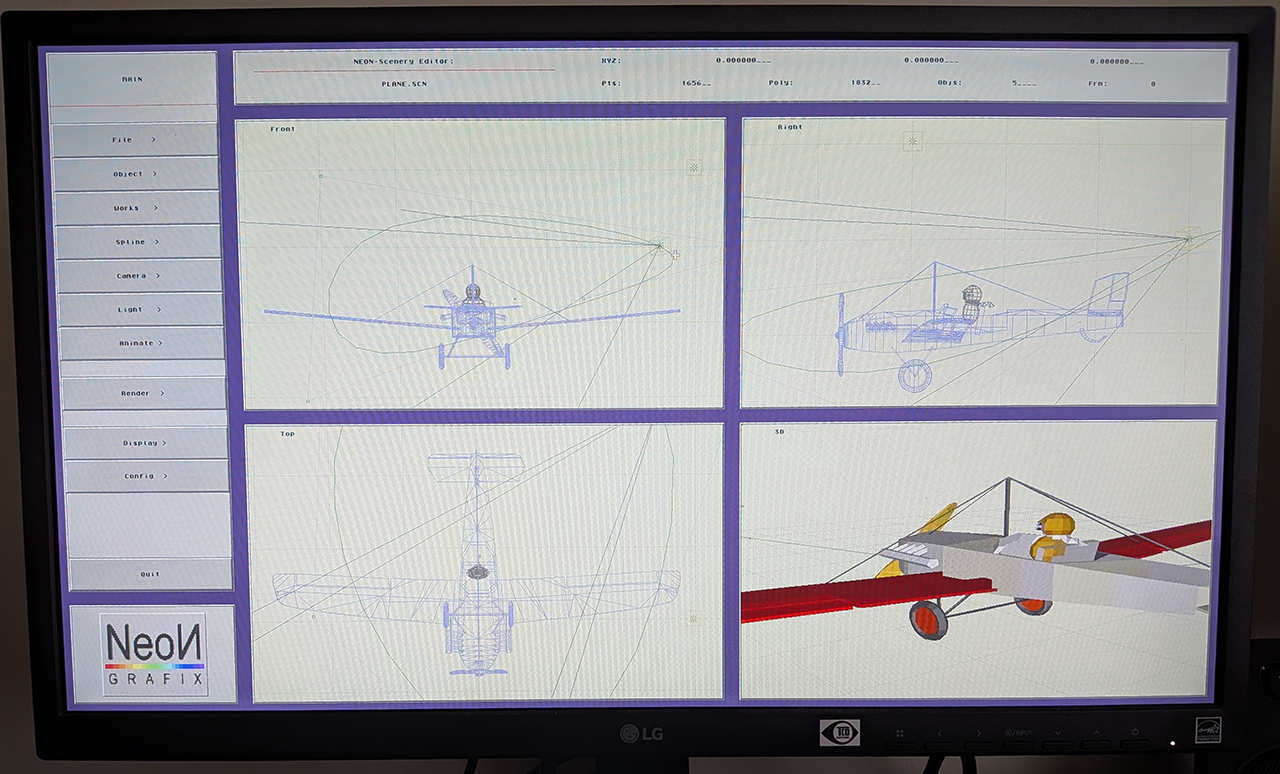
For two decades Fandal maintained the website generally known in the community as "Fandal's website" or "A8.fandal.cz" which was dedicated to the collection, curation, metadata provision and promotion of all kinds of demos and games for the Atari XL/XE system. Among the Atari 8-Bit scene enthusiasts this place was an institution with its over 5.000 games and around 3.800 demos available.
Unfortunately Fandal came to the conclusion to stop his activities, also due to the exuberant wave of AI generated content flooding the retro computing sphere.
"All right, that’s it. My retro hobby is being eaten alive by AI at an ever-faster pace, and I definitely don’t want to reach a point where the news section is nothing more than a list of things generated by a prompt.
For this reason, and also because site traffic has been steadily declining to minimal levels, I’ve decided to stop all updates after more than twenty years."
I remember that in the pre retro computing revival era in the 2000s the website shone as an exceptional project "against the tide" and I always appreciated it. While it is very sad to lose this passionately hand-crafted institution of the Atari scene I have hope the archive remains online for further use.
EDIT: Apparently the PTODT-team has taken care of that providing a mirror!
What is left to say? Thank you Fandal, for for all the years of support and work for the Atariscene!
🔗 Fandals website (PTODT mirror)
PiST - A new cross-IDE (Integrated development environment) aimed at Atari assembler projects.
It includes editor, assembler, emulation with debugger, sprite editor and much more. It is available for Linux, Windows and macOS.
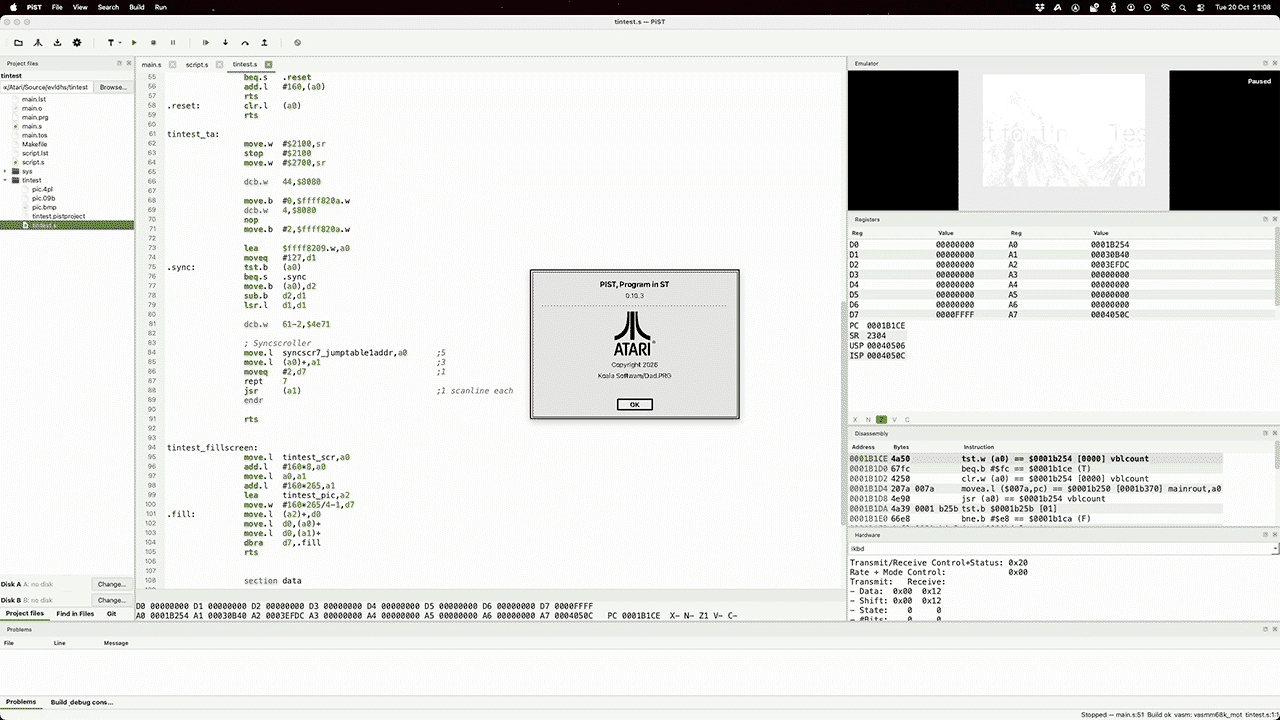
PiST v0.10.3 in action
include or jump to a label, and a searchable 68000 instruction + TOS system-call reference dock that follows the cursor — on a trap #1/#13/#14 line (or a push feeding one) it names the GEMDOS/BIOS/XBIOS call being made and what it is being called with, and every entry carries a worked example and one line on when to reach for itManu fulfilled his dream of going on a road trip in the USA, and he took the opportunity to ask some Atari fans to come on Friday, October 9, to Sunnyvale at the old Atari HQ. Flag unfurled in front of the Google building, Manu showed who's the boss over there ;-) the Atari video starts at 41'.
The most relevant Pokey music tracker software has received a cleanup. After Rasters passing, the source code was fortunately made available, leading to various forks and developments. Unfortunately people lost overview about the changes and so JAC! took the initiative to clean up the sources and make RMT development future more proof.
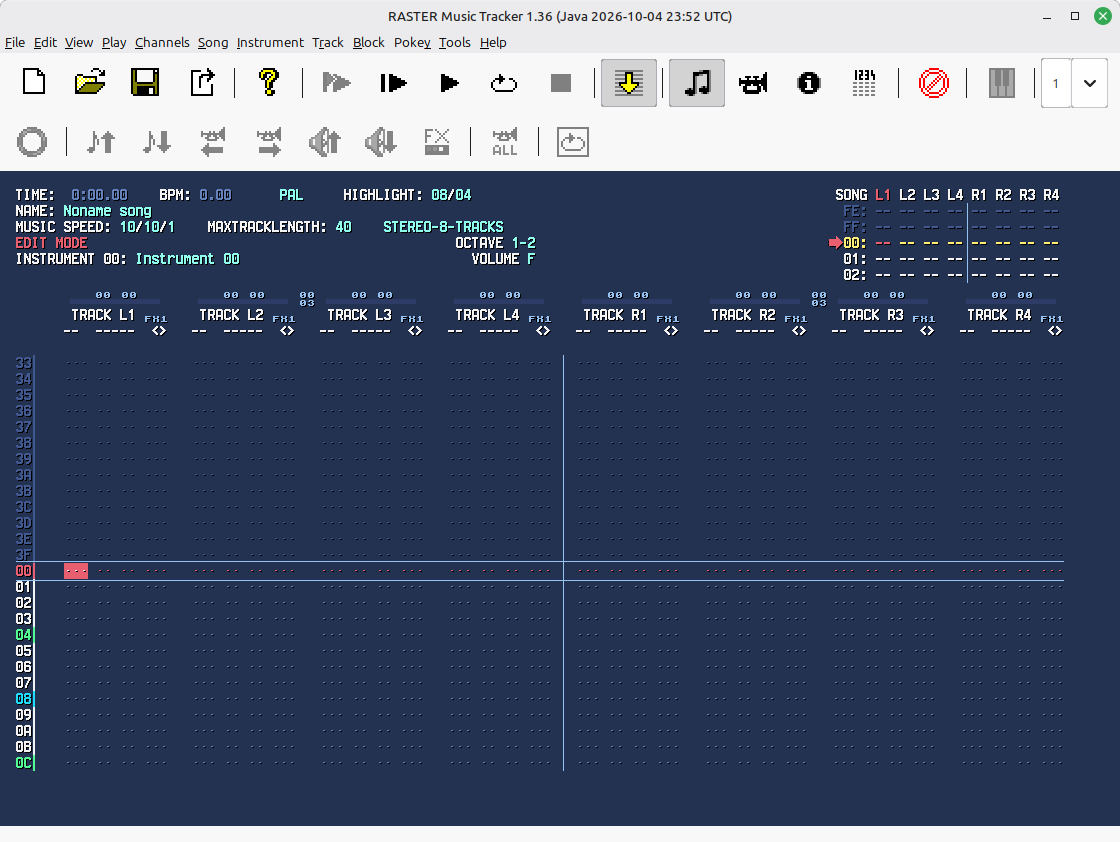
Most significant measure was to create Java port. RMT runs as standalone package or can be compiled for Windows, Apple and Linux.
The general housekeeping, evaluating and removing unused code, fixing shortcut bindings and revision of the menu structure results in a simple and now graphically scalable interface. JAC! is open to suggestions by musician to increase the usability.
With the imminent release of the Atari Falcon 030, Reservoir Gods have updated their development tooling to support the exciting new DSP 56001 chip in these computers. We can't wait to get our hands on one of these bad boys!
Well, we may be 33 years late to the party - but better late than never! The rg cross-development tools now fully support the Motorola DSP56001.
rg-asm
rg-asm now features comprehensive support for the Falcon DSP: the complete DSP56001 instruction set, dual parallel moves, DO loops, all memory spaces. It can emit in many formats, including standard .LOD, .P56, .OUT, .CLD/.CLN, as well as raw bina$
One of really nice new features is support for mixed mode assembly. You can now write your 68030 code and DSP code in a single file, and seamlessly switch between both.
- Equates & constants: 68k constants are automatically inherited in DSP blocks
- Symbol export: DSP routines and labels export back to the host 68k code as equates
- Macros & structs: Share macros and structs between your DSP and 68k code
- Flexible layout: You can embed DSP code as either 3-byte per word packed or 4-byte per word unpacked
Read more: DSP Support comes to RG assembler and disassembler
A few decades have passed since we last saw a new MagiC release for Atari computers.
But time of wonders are not past us and today Andreas Kromke (authour of the original MagiC, Kaos and more) released v6.30 complete with MagxDesk 5.
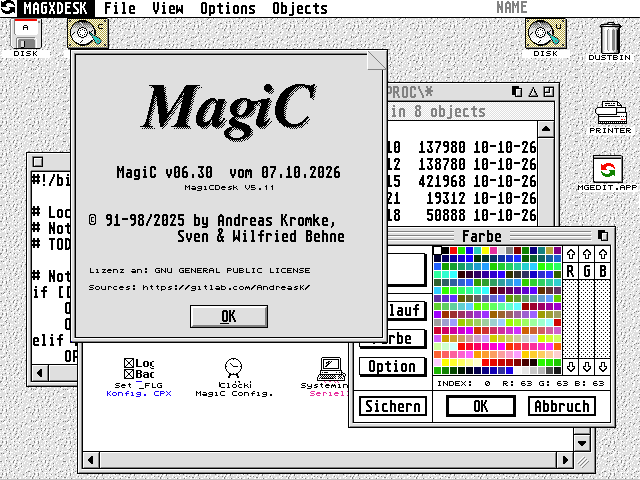
MagiC 6.30 on a Falcon 030 in 256-colour mode
MagiC is now open source under the GNU GPL v3 license.
💾 Download MagiC sources and binaries (see MagiC/Releases for zip archive of binaries)
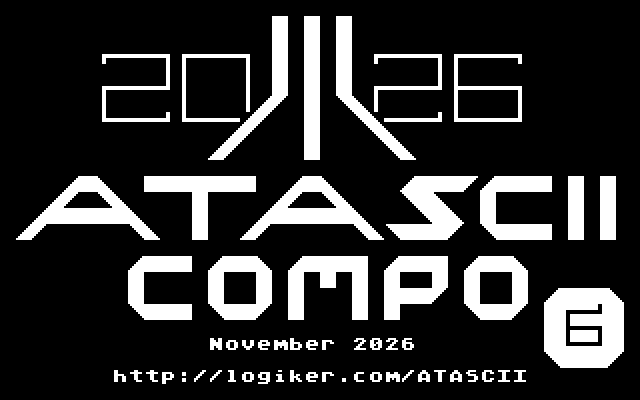
Logiker has announce another round of the ATASCII compo. Submissions can be sent in until 9th of November. The entry presentation, voting and publishing of the results is planned for the week after. Last year some impressive pieces have been shown.
The invitation demo for Buxton Bytes 2027 (9th-12th of April 2027 ) has been released at the beginning of October. It's a very stylish joint venture prod by Evil, Jade, gwEm and Tronic and also meant as an invitation call to contribute to the various "non-compo compos".
Buxton Bytes - a stylish delight for plasma devotees
More details on the categories, attendees etc. can be found on the Buxton Bytes 2027 website.
🔗 Buxton Bytes 2027 invitation on Demozoo
🔗 Buxton Bytes 2027 invitation on Pouet
A quick release, with 68000 and ColdFire builds
This is a quick release with various bug fixes. It is the first release with 68000 and ColdFire support, and those builds have not been fully tested yet. The 68000 build uses software floating point; the 68020–60 and ColdFire builds use the hardware FPU. NanoSVG, which draws SVG images, works in floating point, so SVG is slowest on the 68000. A 68000 build without SSL is also included, for local pages and for HTTP proxies such as WebOne.
New in this release: Copy and Paste for text, animated GIFs, an optional screen buffer, much more complete flexbox and grid, line-height, position: fixed, viewport units, styled buttons and text fields, live :focus styles, resumable downloads and run-time switches for SVG, WebP, HTTPS, GIF animation and the screen buffer.
The next full release will be HighWire 1.0, to avoid problems with another project.
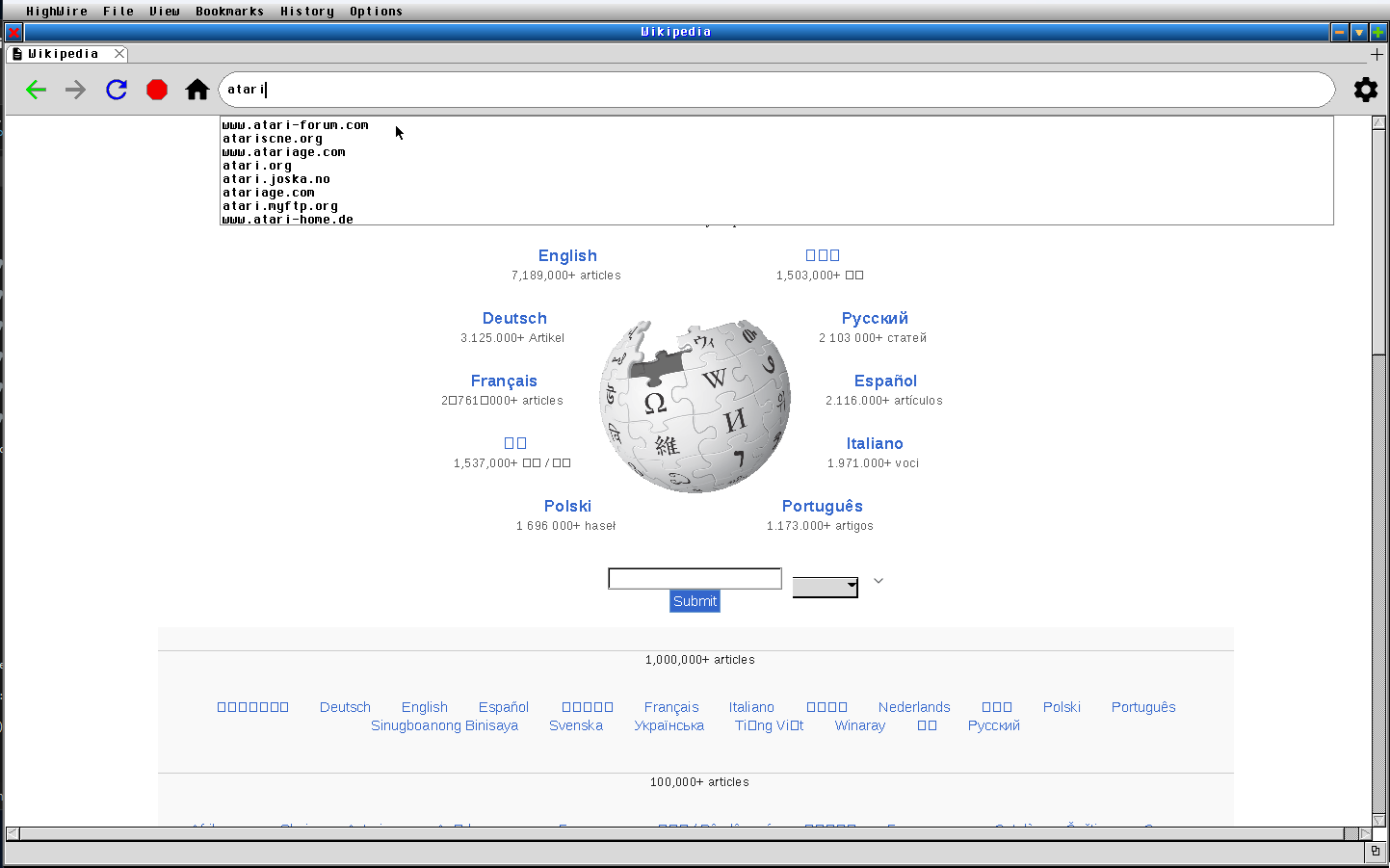
Highwire showing the Wikipedia website, screenshot from the Highwire site
🌏 https://highwire-browser.github.io/
💾 Download Highwire 0.5.0 Beta 4
And Lotek Style's excursion in the realms of Atari related physical audio releases continues... enjoy!
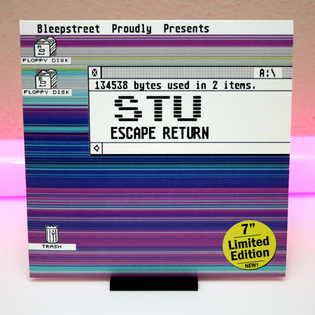
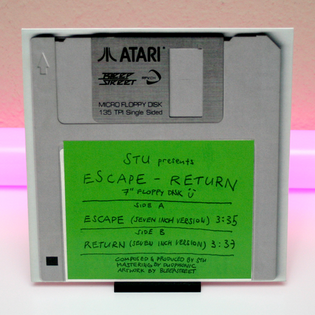
Stu Escape Return [Vinyl, 7", 45 RPM, Single, Limited Edition][Bleep Street BLEEPST32]
https://www.discogs.com/de/release/11539404-Stu-Escape-Return-
Well known Musicmon-Wizard STU dropped another two-track bomb on 7" single in 2017. This is pure Atari chiptune madness pressed onto vinyl.
A Escape (Seven Inch Version)
B Return (Seven Inch Version)
42Bastian keeps improving his Atari Jaguar engine. Another WIP showcasing video recording has been published featuring lovely Virgill Hively tracker music, so what can go wrong entering this 3D world for a moment?
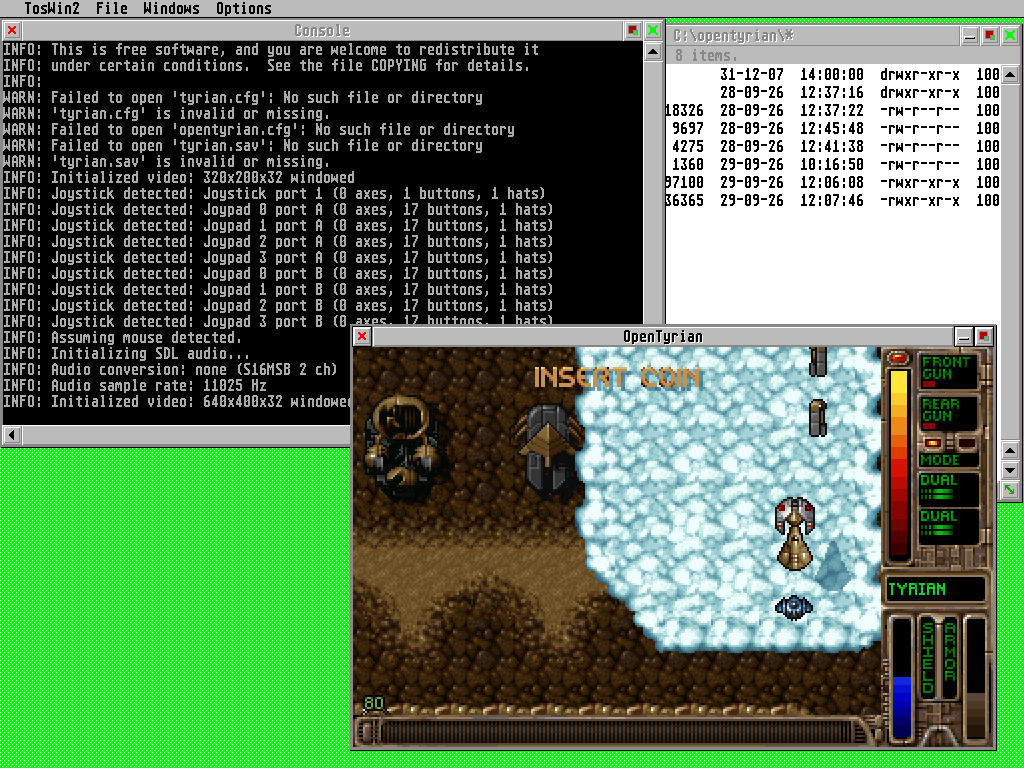
Back in 2010, when I released my HHeretic/HHexen for the first time (!), I had a dream: to be able to play those two games (and others: Doom, Duke Nukem 3D, ...) while listening to their great MIDI soundtracks. I knew next to nothing how MIDI works, how MIDI synthesis works, I only knew there is something called Timidity and that it is slow.
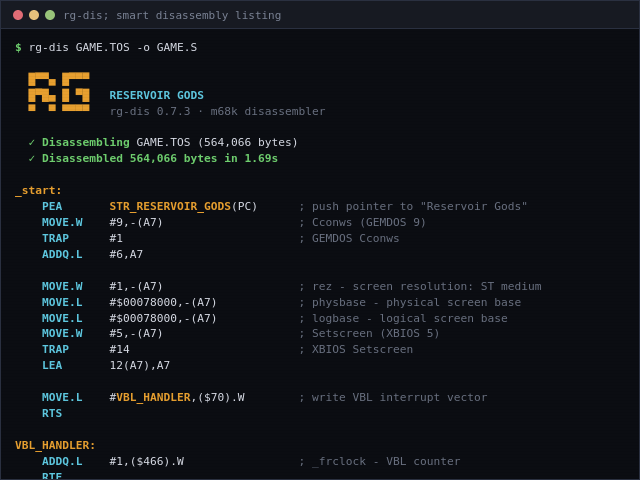
🔗 https://rg.atari.org/tools/rg-dis/index.html

Hi!
I've just released ASE v1.12 with a bunch of emulation fixes and a few new features I think are pretty cool.
The biggest one is probably the new ST display settings. I've added several shaders for a more retro look or cleaner image, but there's one I've been working on especially for ST emulation: Colorize Dithering.
It detects common dithering patterns, like checkerboards, and turns them into solid colors and gradients. That means some games and images can appear to show colors well beyond the original ST palette, in some cases even tens of thousands of colors. Combined with Anti-Aliasing, it can make some 3D games look surprisingly different.
I've published a video in my youtube channel showing how those features works:
Drive B is now emulated too. Adding it also fixed quite a few compatibility issues with games that tried to detect or access a second floppy drive.
There's also a new Bitmap Explorer under the Debug tab. It lets you browse ST RAM graphically and extract things like sprites, tiles and screens from games. Every game stores graphics differently, so it won't work perfectly everywhere, but it's already usable with a lot of games. I have more improvements planned for future versions.
Thank you!
Best regards
💾 Get the emulator and the sources on GitHub
A**** online magazines have published an interview with Vasyl/Joker, who was showing an impressive presence in form of skillful pixel graphic entries at various Atari parties during the last years.

Vasyl's Atari ST graphics entry for Sillyventure 2026 summer edition
Read more about his views on the Polish scene, platforms, motivations and (drumroll) AI in the interview.
© 2025-2026 The Atariscne Collective | info@atariscne.org